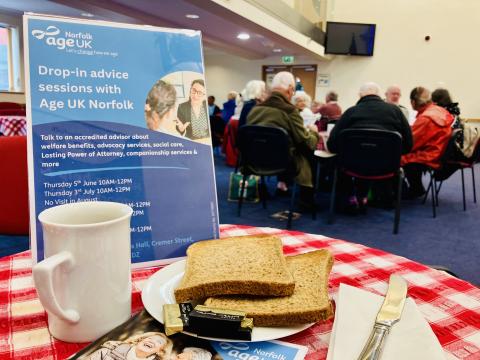
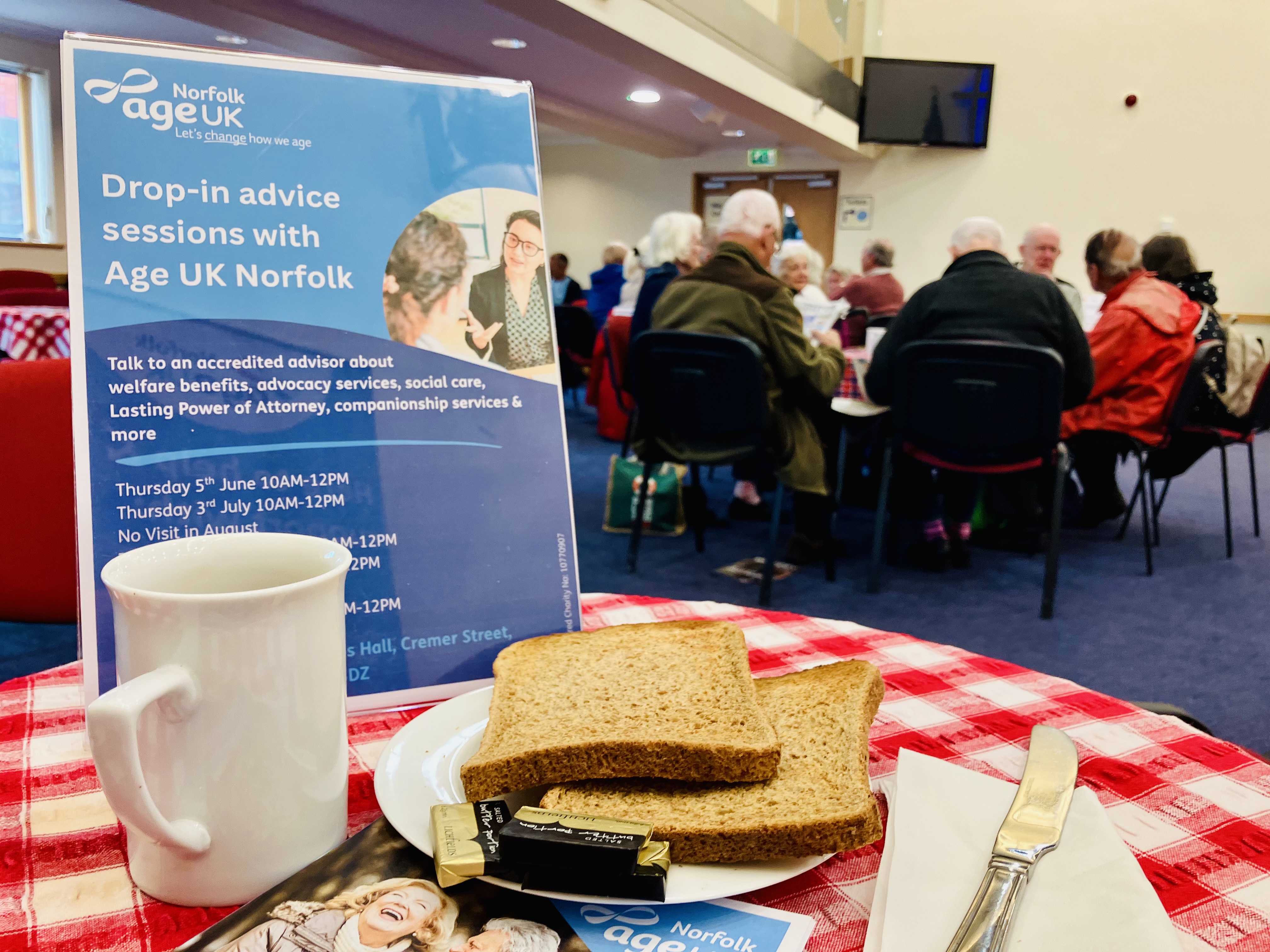
Photo credit: Age UK Norfolk
Our Grant Programme Manager, Eva Pryce, explores the challenges and learning opportunities for funding older people projects.
As we continue to support organisations delivering vital services to older people across London and Norfolk, helping them to feel connected, empowered and able to access the support they need, shared themes are emerging. We are hearing consistent reflections on a changing funding landscape, the increasing complexity of older people’s daily lives and a widening gap between need and available resources.
While there are no simple answers, these learnings can inform how we think about our role as a funder.
Rising pressures
Across the sector, organisations are telling us that they are experiencing extremely difficult and unpredictable times. Rising costs, complex support provision and reductions in funding and increased pressure on charitable services have led to what NCVO has described ‘the big squeeze’ 1. Many charities are relying on reserves to meet rising core costs, meaning every pound they raise must go further than ever, while public donations are declining and competition for funding intensifies. Trusts and Foundations are experiencing a 30–50% increase in applications, with some responding by altering their guidelines or pausing altogether 2. Across our programme, we know that only 1 in 10 applications are successful.
Within this picture, funding specifically for older people is becoming increasingly scarce for organisations to access. London Funders 2025 Members’ Audit showed that only 13% of members reported funding projects classified as ‘Other’, a category which includes older people and carers. This was a decrease of 3% since 2023 3 highlighting a slow but notable contraction. Certainly, support for older people can be included within funding for poverty, health and social care. Nevertheless, there is indication that there is a lack of dedicated and tailored funding specifically for older people and their needs.
What we are hearing from grantees is that this scarcity does not reflect a reduction in need. Older people are increasingly experiencing poverty, isolation and low living standards. 17% of pensioners live in relative poverty, with 8% of pensioners living in material deprivation, which rises to 12% in London 4. It is estimated that 2.3 million people over the age of 55 are living in non-decent homes, which can increase health risks and potential hospitalisation. Healthy life expectancy is also falling, with many attributing this to the cost of living crisis. Isolation and loneliness are also a significant issue, with risk factors including illness, bereavement and low income. Age UK reports that 270,000 older people (aged 65+) in England go a week without speaking to a friend or family member 5.
What organisations are telling us
Many grantees have flagged to us that the funding sector is becoming increasingly complex to navigate.
As a relational funder, one of the most valuable aspects of our work is building open and trust-based partnerships providing opportunity to listen and learn from our grantees. Their insights help us understand the lived experience of beneficiaries and the specific challenges they and the organisations we support face.
Edmund Kung MBE, Executive Director at Sport4health, a sports charity providing activities for older people in Battersea, London, highlighted:
“It is a real issue finding funding opportunities for older people… some funders who previously supported "ordinary but important" older people's activities and services - such as lunch clubs, socialisation - no longer do so. Many now cite the mantra of wanting to focus on "system change" but I have yet to see anyone explain what exactly that entails. Very few funders now have an approach whereby they ask groups, "what do you need?"
Their reflection raises important questions for funders about how language, funding priorities, strategic aims and frameworks could unintentionally distance us from the realities of community-based services and the participants who we are looking to serve.
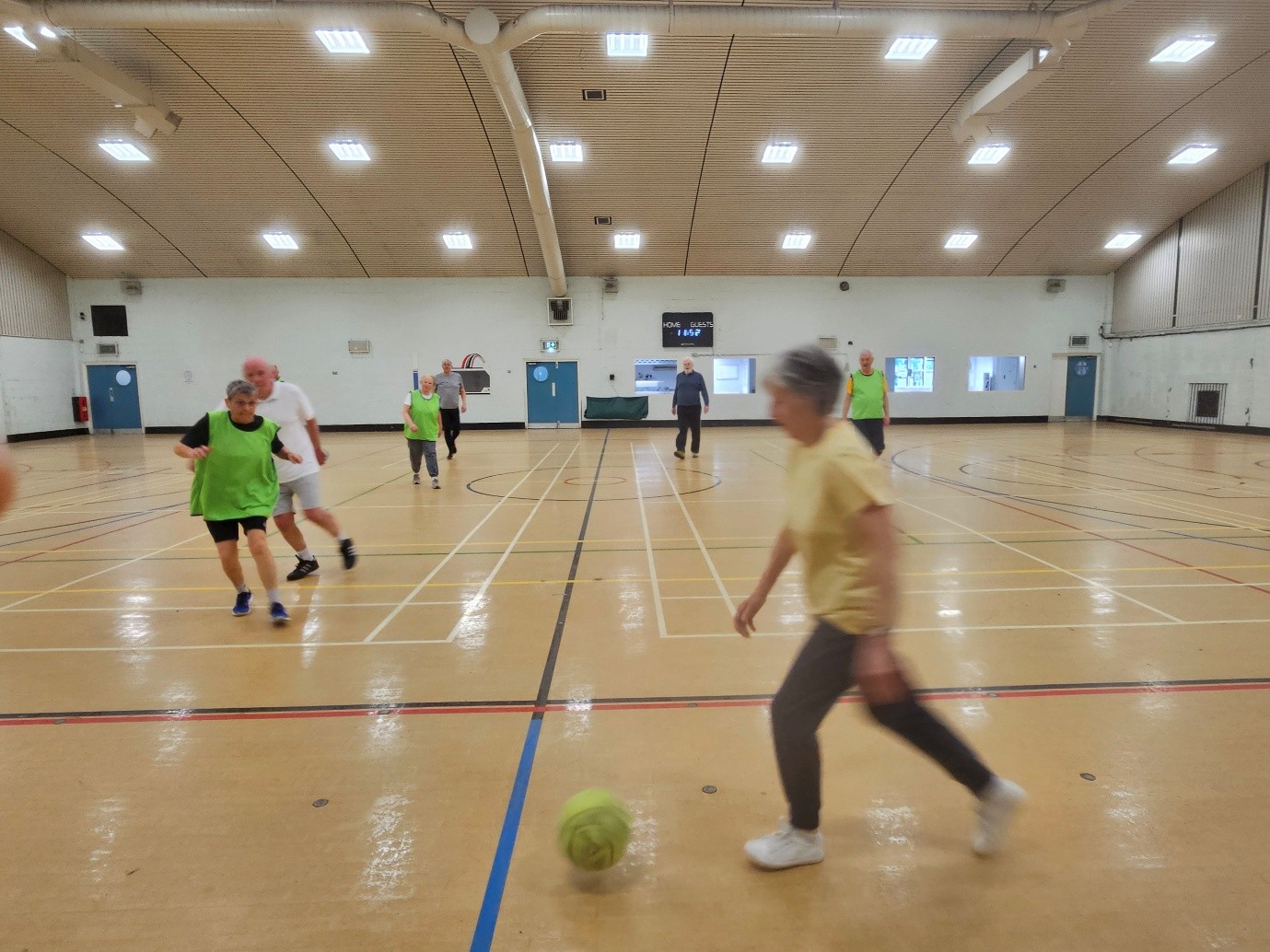
Photo credit: Sport4Health
From a different perspective, Michelle Diston-Jay, Head of Fundraising and Communications at Age UK Norfolk, who provide advice, guidance and support across the county, highlights the challenges in funding, underlining the issues faced by older people living rurally and how this may not match existing funding guidelines:
“One key issue is the myth that all “baby boomers” are financially secure, when in reality poverty and deprivation are often as prevalent among older people as in any other age group. Services for older people can struggle to compete with more ‘contemporary’ causes, despite the clear demographic shift towards an ageing population and the preventative value of early support. We are also finding that funding criteria focused on visibly deprived urban areas can disadvantage rural and coastal counties like Norfolk, where deprivation is dispersed and often hidden.”
Their insight challenges us to consider how funding criteria could have a direct impact on supporting smaller communities in more rural areas that may not appear within national heat maps, yet experience very real hardship, particularly among older residents facing transport barriers, fuel poverty and digital exclusion.
Learning from our OP&H programme
From 2024 to 2025, our Older People and Housing Programme supported 24,338 people to feel better connected. Examples of provision supported include an older people’s housing advice service, an arts befriending programme for people living with dementia and a transport and activity service in rural Norfolk. You can read more about these projects in our Annual Review.
Although these projects differ in approach, they each share a commitment to person-centred, values-led work. Projects that provide safe, inclusive spaces for older people, supported by empathetic staff and dedicated volunteers. Delivery focuses on being flexible and collaborative, tailored to the local needs and challenges experienced by the older people they support.
These insights invite us to continue asking questions about our own role as a funder:
- How do we ensure that our funding criteria recognises hidden need?
- How do we support systemic change or new projects, without neglecting established immediate provision?
- How do we use what our grantees are sharing to influence wider change?
Reframing how older people fit into the funding picture
As many funders review their priorities and models, we see an opportunity to centre older people more explicitly in funding objectives and wider philanthropic picture. Their experiences reflect broader societal challenges – inequality, housing quality, health, social connection.
By funding older people’s projects, funders can play a key part of ensuring that people have continued agency, opportunities and security in older age. This contributes to creating a caring, understanding and inclusive society that benefits us all throughout our lives.
We will continue to reflect on these insights; learn from organisations we partner with and consider how our approach can evolve to meet the realities of an ageing population.
Read more about our Older People & Housing Programme here.
References
2025: The year of the 'big squeeze' - The Road Ahead 2025 | News index | NCVO
2025: The year of the 'big squeeze' - The Road Ahead 2025 | News index | NCVO
What our latest member audit tells about the state of funding in London | London Funders
The-State-of-Ageing-2025-interactive-summary.pdf
you-are-not-alone-in-feeling-lonely.pdf